








Electrophysiology Internal Solution Kits
★ Introduction ★ Product Range ★ Benefits ★ Choose Your Kit ★ How to Use ★ References
Ready-to-Use Internal Solution Kits for Patch Clamp Electrophysiology
Electrophysiology internal solutions are essential for reliable patch clamp recordings, directly influencing cell stability, signal quality and experimental reproducibility. However, preparing internal solutions manually is time-consuming and prone to variability, particularly when weighing small quantities of multiple components.
Hello Bio electrophysiology internal solution kits are exclusive, ready-to-use no-weigh formulations designed to simplify patch clamp workflows. Each kit contains pre-formulated, precision-weighed powders for fast and consistent preparation, helping reduce preparation time, minimise user-to-user variability and support more reproducible recordings.
Exclusive Internal Solution Kits for Patch Clamp Recordings
Choose from exclusive potassium- and cesium-based internal solution kits for current clamp, voltage clamp and synaptic current recordings. All kits are designed to reduce manual preparation and improve consistency at the bench.
Exclusive to Hello Bio: these ready-to-use internal solution kit formulations are only available from Hello Bio.
Why Scientists Are Switching to Ready-to-Use Internal Solution Kits
Manual internal solution preparation can introduce delays, waste and unwanted variability. Hello Bio no-weigh kits are designed to remove the most time-consuming steps while maintaining the consistency needed for high-quality patch clamp electrophysiology.
Traditional Manual Prep
- Sourcing, ordering and tracking expiry dates for multiple individual salts.
- Weighing small quantities of hygroscopic chemicals.
- Greater risk of human error and batch-to-batch inconsistency.
- Higher reagent waste from buying bulk salts to use only small quantities.
The Hello Bio Ready-to-Use Kit
- Exclusive pre-formulated internal solution kits in one convenient format.
- No weighing required — just add dH2O and adjust as directed.
- Consistent formulations to support reproducible, publication-quality recordings.
- Includes matched hydroxide solution preparation for rapid pH adjustment.
What Researchers Say
What is an Internal Solution in Electrophysiology?
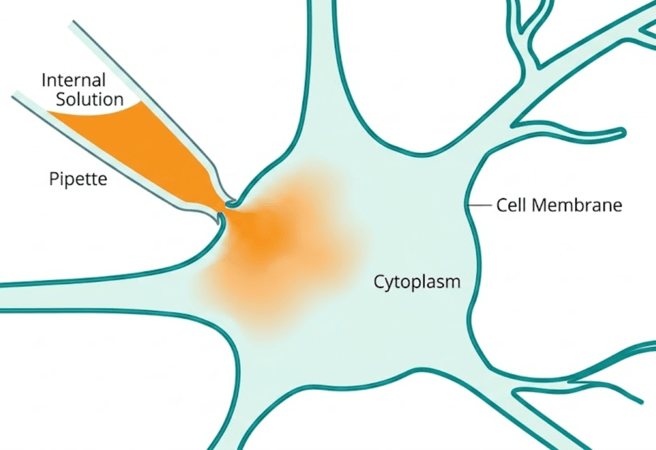
An internal solution, also known as an intracellular solution, is the fluid contained within the patch pipette during whole-cell patch clamp electrophysiology experiments. Once the whole-cell configuration is achieved, this solution equilibrates with the cell cytoplasm and helps define the intracellular ionic environment throughout the recording.
Composition is critical. Internal solutions influence membrane potential, ion channel activity, synaptic currents and recording stability. Typical formulations include buffering agents such as HEPES, energy sources such as Mg-ATP, calcium chelators such as EGTA, and defined potassium- or cesium-based salts.
Because even small changes in composition, pH or osmolarity can affect electrophysiological recordings, consistent internal solution preparation is essential for reproducible data.
Which Internal Solution Kit Do You Need?
The choice between potassium- and cesium-based internal solutions depends primarily on whether you are performing current clamp or voltage clamp recordings.
- Potassium-based internal solutions (K+) are typically used when preserving a more physiological intracellular environment is important. They are well suited to current clamp experiments, including resting membrane potential, action potential firing and synaptic plasticity studies.
- Cesium-based internal solutions (Cs+) are used when the goal is to isolate specific ionic currents under voltage clamp. Cesium blocks many potassium channels, improving voltage control and supporting recordings of synaptic currents such as AMPA- and NMDA-mediated responses. QX-314 may also be included to block sodium channels and prevent action potential generation.
Choosing the Best Electrophysiology Internal Solution Kit for Your Protocol
Use the table below to compare cation type, formulation features and example applications for each exclusive Hello Bio internal solution kit.
| Product Name | Primary Cation | Key Features | Example Applications | Example Trace |
|---|---|---|---|---|
| Potassium methanesulfonate (KMeSO3) Cat No: HB8727 |
K+ |
Physiological potassium-based internal formulation. Useful alternative to cesium-based internal solutions where more physiological membrane properties are required. Contains (in mM): KMeSO3 120, HEPES 10, EGTA 0.2, Mg-ATP 4, Na-GTP 0.3, NaCl 8, KCl 10. |
Current clamp, STP/LTP measurements. | 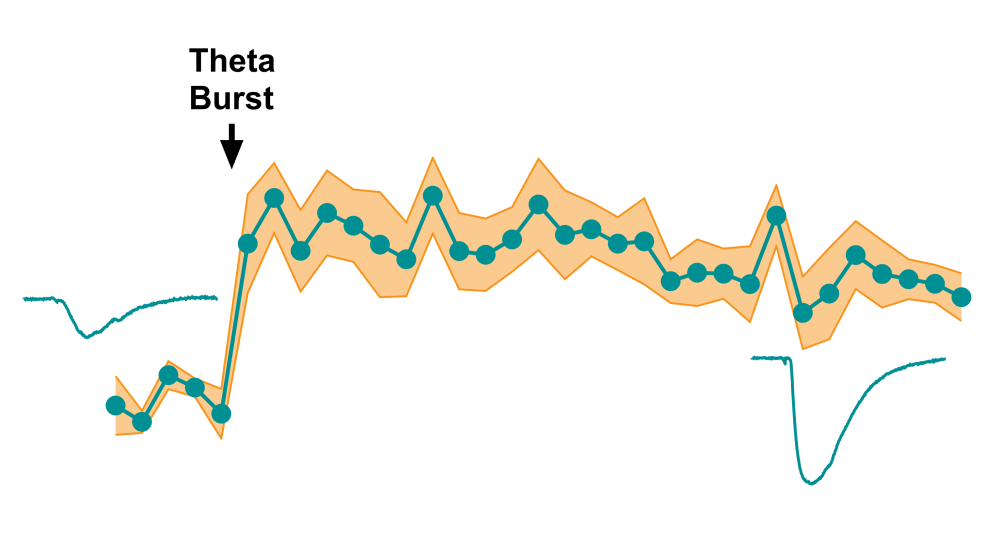 |
| Potassium gluconate (K-Gluc) Cat No: HB8297 |
K+ |
Physiological formulation using gluconate anion. Features increased buffering capacity with 40 mM HEPES. |
Current clamp, neuronal firing patterns. | 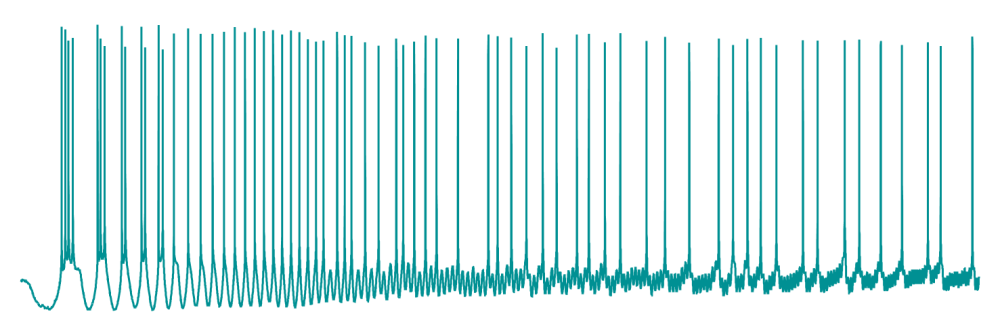 |
| Cesium methanesulfonate (CsMeSO3) Cat No: HB7783 |
Cs+ |
Blocks K+ conductances to support tighter voltage clamp than potassium-based solutions. Contains (in mM): CsMeSO3 130, HEPES 10, EGTA 0.5, Mg-ATP 4, Na-GTP 0.3, NaCl 8. |
Voltage clamp, mini EPSC / mini IPSC recordings. | 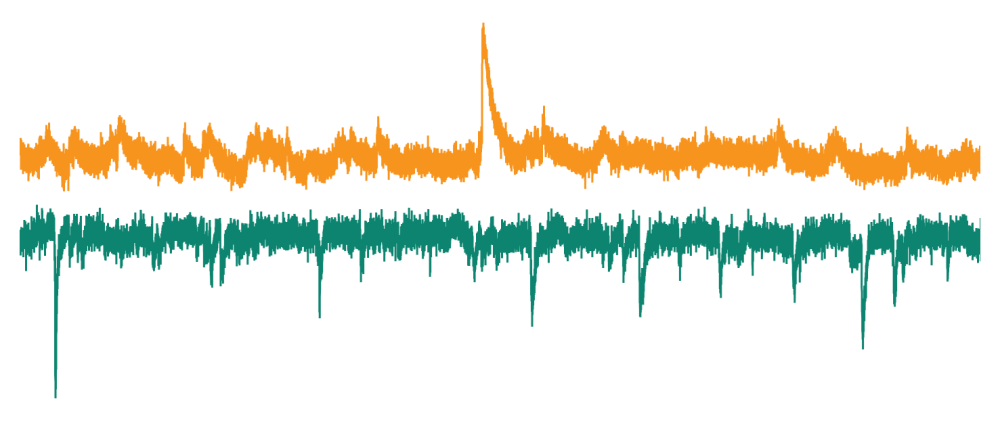 |
| CsMeSO3 with QX-314 Cat No: HB31291 |
Cs+ |
Includes QX-314 and spermine to block Na+ currents alongside Cs+-mediated K+ current blockade. Supports isolation of synaptic currents. Contains (in mM): CsMeSO3 130, HEPES 10, EGTA 0.5, Mg-ATP 4, Na-GTP 0.3, NaCl 8, QX-314 5, spermine 0.1. |
Isolating AMPA/NMDA receptor-mediated currents. | 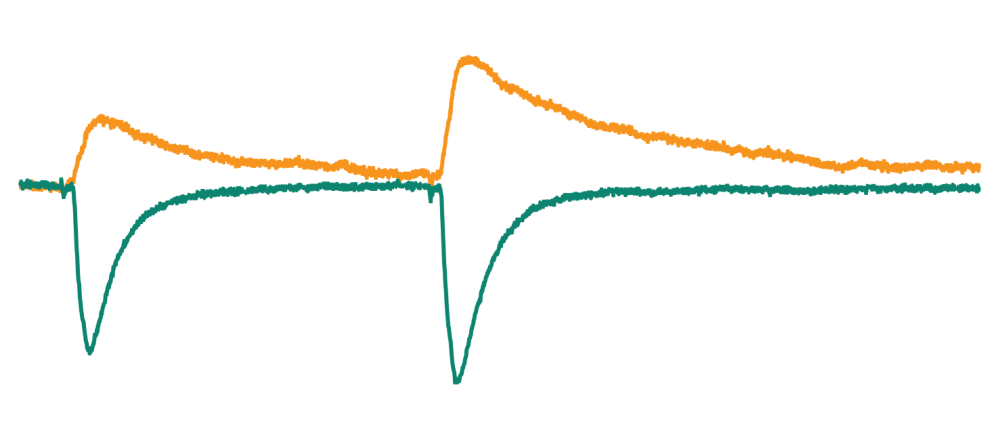 |
| Cesium gluconate (Cs-Gluc) Cat No: HB8198 |
Cs+ |
Cesium-based formulation using gluconate anion. Contains TEA to further suppress K+ conductances. Contains (in mM): Cs-Glu 117, HEPES 20, EGTA 0.4, Mg-ATP 4, Na-GTP 0.3, NaCl 2.8, TEA 5. |
Voltage clamp recordings. | 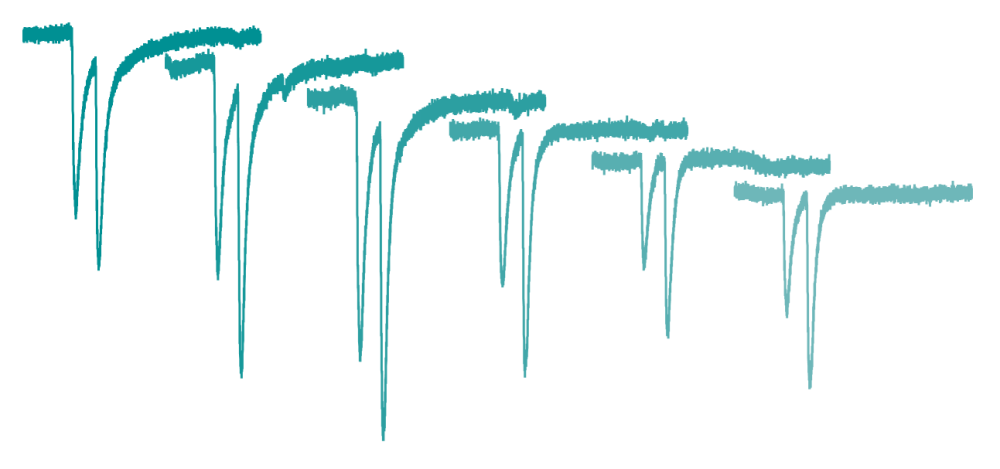 |
How to Prepare Patch Clamp Internal Solutions with No-Weigh Kits
Each kit is designed to create approximately 80–100 mL of internal solution using a simple, reproducible preparation workflow.
Dissolve the included KOH or CsOH in dH2O to create a 5 M solution.
Empty the pre-weighed internal solution powder into 70 mL of dH2O and mix thoroughly.
Add hydroxide dropwise to reach pH 7.2, then top up with dH2O to your target osmolarity.
Divide into daily aliquots and store at -20 °C. Thaw only what you need for the day’s recordings.
References
- Banks et al., 2021. Plasticity in Prefrontal Cortex Induced by Coordinated Synaptic Transmission Arising from Reuniens/Rhomboid Nuclei and Hippocampus. Cereb Cortex Commun. PMID: 34296174
- Buchanan et al., 2010. Facilitation of long-term potentiation by muscarinic M(1) receptors is mediated by inhibition of SK channels. Neuron. PMID: 21145007
- Park et al., 2021. PKA drives an increase in AMPA receptor unitary conductance during LTP in the hippocampus. Nat Commun. PMID: 33462202
- Segev et al., 2016. Whole-cell Patch-clamp Recordings in Brain Slices. J Vis Exp. PMID: 27341060